
MISSION STATEMENT
My goal with The American Soldier has never been political but to sincerely thank our veterans and their families for their sacrifice and service to our nation.
To raise awareness of the struggles Veterans and Military families face when they either come home from war, transition out of the military, and, of course, the invisible wounds of PTS. Most importantly, I want to help those who have no connection to the military better understand what service to our nation sincerely means.
I guess the goal since I first performed the play in 2015 for eight people in the Lower East Side of Manhattan has been to pull back the curtain to war and give meaning to the term we throw around so frivolously, “Thank you for your service.”

I sincerely hope audiences will go away with a deeper appreciation of the tremendous sacrifice our servicemen, servicewomen, and their families have made for our country.
Did I serve? No, I have never served in the military, but my family has served. My sister retired as an Srgt. in the Army; a nephew became a Marine, and two nieces are in the National Guard.
“Flawless and powerful”
- The Huffington Post
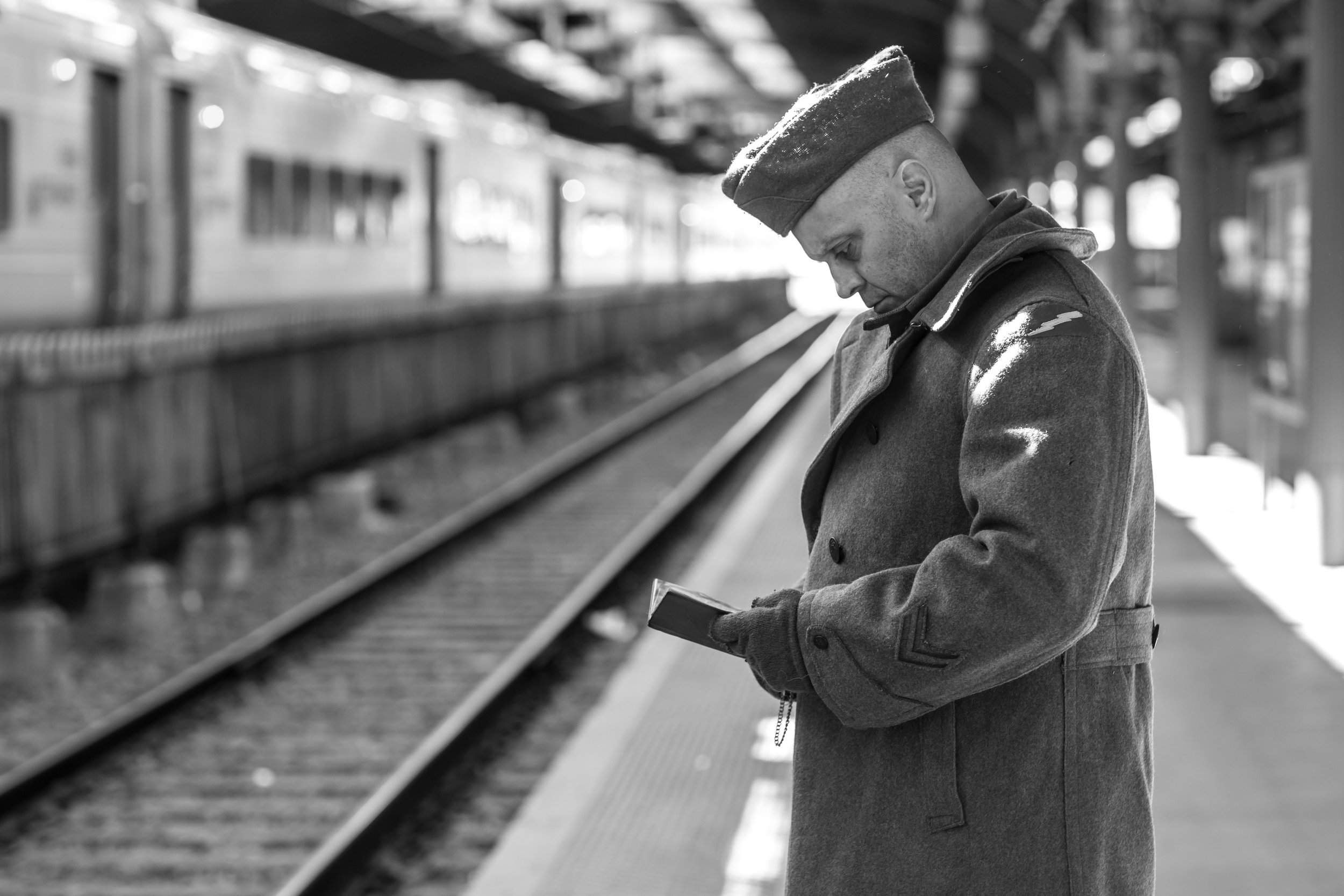
Producton History
-
![]()
Charleston, South Carolina @ Footlights Theatre Company - May 29th - 31st
-
![]()
Fall River, Massachusetts - May 2nd
Williamsburg, Virginia @ The Yorktown Foundation - June 14th
Grand Rapids, MN @ The Reif Arts Center - November 14th
Off-Broadway @ New York Rep - Dec 1st - 21st
-
![Silhouette of Darth Vader holding a lightsaber, iconic Star Wars character.]()
Clinton Township, Michigan - January 20th, 2024
Watertown, New York - February 27th, 2024
University of Tennessee - March 8th, 2024
San Antonio, Texas - July 12th, 2024
Washburn, Maine - August 18th
Washington, D.C. - Doughboy Foundation - September 14th, 2024
Washington, D.C. - The Kennedy Center - October 26th, 2024
Ottumwa, Iowa - November 2nd
Bloomsburg, Pennsylvania- November 8th & 9th
River Falls, Wisconsin - November 11th
Dallas, Texas - November 14th
-
![Black silhouette of a city skyline, including buildings and a bridge, with a crescent moon and stars above.]()
Monmouth University, NJ - March 31st
Fall River, Massachusetts, September 22nd
Blacksburg, VA - September 26th & 27th
Cadillac, MI - October 20th, 21st 2023
Fredericksburg, TX - November 10th, 11th, 12th
Woodstock, CT - November 16th, 2023
Bloomsburg, PA - November 19th, 2023
-
![Black and white illustration of a seated Winnie-the-Pooh and Piglet talking.]()
Bedford, NY - March
Tracy, CA - May 23rd
Champaign, IL - May 28th
Madison, WI - June 30th
Charleston, Illinois - November 3rd
Monmouth University, NJ - November 11th
Philadelphia, Ohio - November 17th
-
![Vector illustration of unicorn head with geometric pattern and curls in black lines on white background.]()
Granbury, Texas - July 1st and July 2nd
Sedona, AZ - October
Los Angeles, CA - November
Dubuque, Iowa - November
-
![Silhouette of a person sitting in a kayak on a calm sea, with the sun setting in the background, casting a reflection on the water.]()
Storm Lake, Iowa - March 10th, 2020
New Orleans, LA - November 10th, 11th & 12th, 2020
-
![Griffin stencil illustration in black and white.]()
Barnstable, MA, November 11th, 2019
Kennedy Center, Millennium Stage, November 13th 2019
Derry, New Hampshire, June 6th, 2019
University of New Hampshire, Durham, New Hampshire
Modesto, California, American G.I Network
Stockton, California, San Joaquin Delta College
-
![Silhouette of Sherlock Holmes with a pipe]()
New York Federal Reserve Bank, Manhattan
Harvest House Center, Florida
Algonquin Arts Center, New Jersey
Hoboken Museum, New Jersey
The American Legion National Headquarters, Indianapolis
Monmouth University, West Long Branch New Jersey
Hearts4Heroes Fundraiser, Bedford, New York
Library of Congress, Washington, D.C. Memorial Day
-
![Silhouette of a person meditating in lotus position with a sunrise background.]()
Farm Theatre Solo Show Festival, Off Off Broadway
Library of Congress, Washington, D.C. Veterans Day
Yorktown, Virginia, The American Revolution Museum
Michael Chekhov Festival, Ridgefield, Connecticut
Beach/Schmidt Performing Art Center, Hays, Kansas
Bannerman Castle, Bannerman Island, New York
Emma S. Barrientos Mexican Art Cultural Center, Austin, Texas
Atria at the Arboretum, Austin, Texas
The Kennedy Performing Arts Center, Washington, DC
-
![An illustration of a person wearing a hooded cloak standing on a cliff with a crescent moon and birds flying in the background.]()
Chocolate Factory, Red Hook, New York
Miles Square Theatre, Hoboken, New Jersey
Talento Bilingüe Arts Center, Houston, Texas
-
![A minimalist drawing of a cat standing and holding a glass of wine, wearing glasses and trousers.]()
Midtown International Theatre Festival, Off Off Broadway
Edinburgh Festival Fringe @ Zoo Theatre – Edinburgh, Scotland
East To Edinburgh Festival @ 59 East 59 Theatre, Off-Broadway
Mono A Mono Festival, New York, New York
Matt Hoverman’s Solo Show Workshop






"His one-man show...he honors our veterans in their own words..."
– The Military Times
THE PLOT + TECHNICALS OF the show
Plot
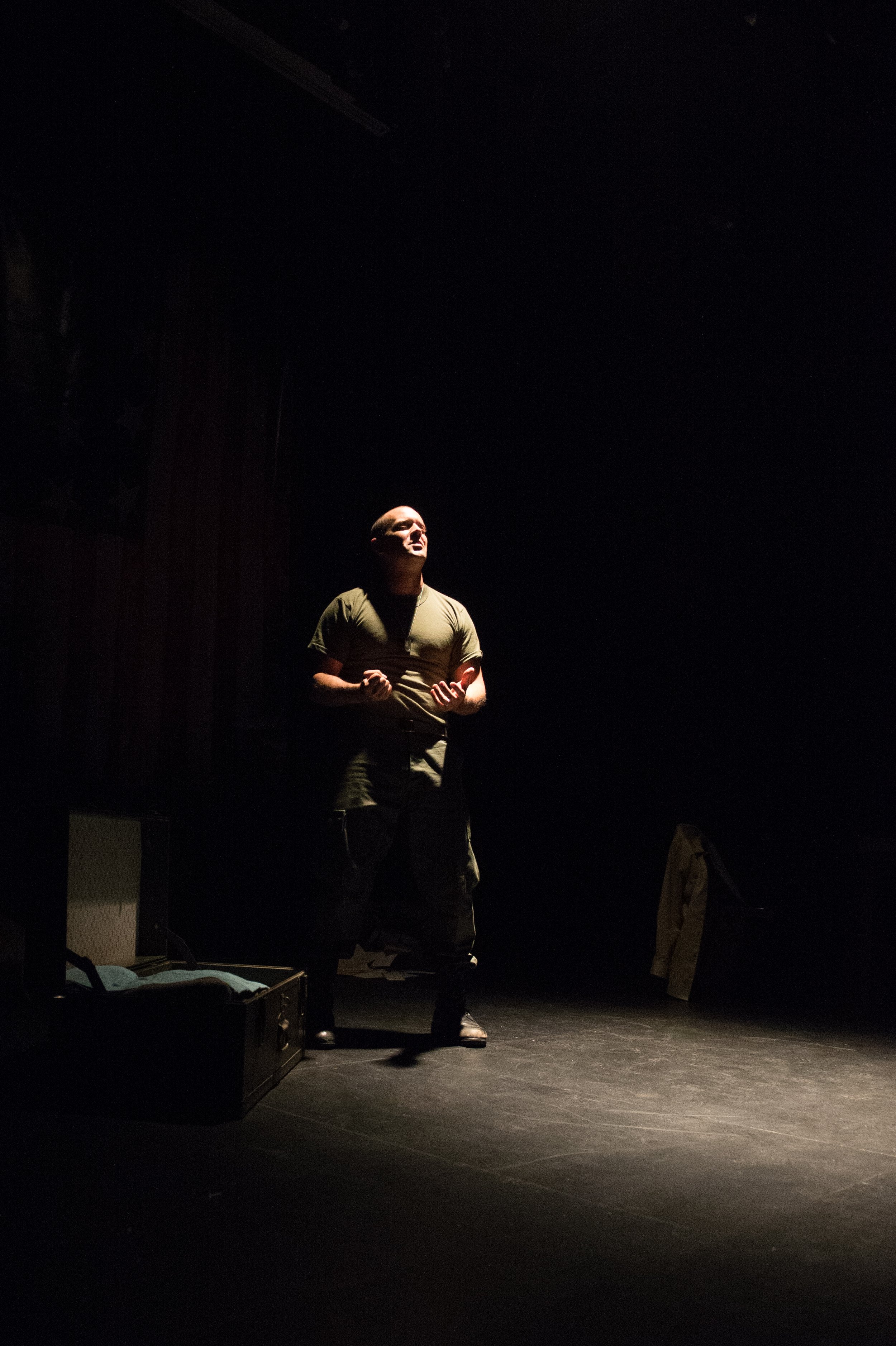
There are fourteen characters based on real stories and actual letters written by veterans and their family members from the American Revolution, all the way through current day Afghanistan. The story is told with a through-line and a strong message but not chronologically. It examines the internal struggles and problems that soldiers face when returning home from combat and the sacrifice made by our veterans and their families.
We see one character who represents all the powerful and beautiful things of the military – discipline, teamwork, and brotherhood. He is the only character who comes out more than once to share these lessons with us. All other aspects are only seen once, and they represent our glimpse of what sacrifice is for our veterans and their families.
The play starts with our narrator sharing his lesson in discipline. We see a Revolutionary soldier freezing at Valley Forge, a grieving mother remembering her son and his story of how he died in Vietnam, our narrator sharing his lesson in teamwork, our Bronx WWII veteran suffering with the effects of PTSD from his experience in Iwo Jima, our African American Vietnam Vet, our Iraq veteran addicted to the adrenalin of war, a wife and son dealing with the father’s absence while he is away at war on 3rd deployment in Afghanistan, a father in the wake of his soldier son’s suicide from Iraq, a chicano soldier dealing with the loss of his limb and his wife helps him to stand up again, a WWI soldier sharing his love for his brother in the trenches, an eloquent Civil War Soldier writing his final letter to his wife (the Dear Sarah letter), and finally our narrator sharing his lesson in brotherhood.
All props are stored and pull out of the army trunk. The army trunk represents everything that is a soldier – life, death, friendship, and survival.
THE PLOT + TECHNICALS OF the show
Technical Rider
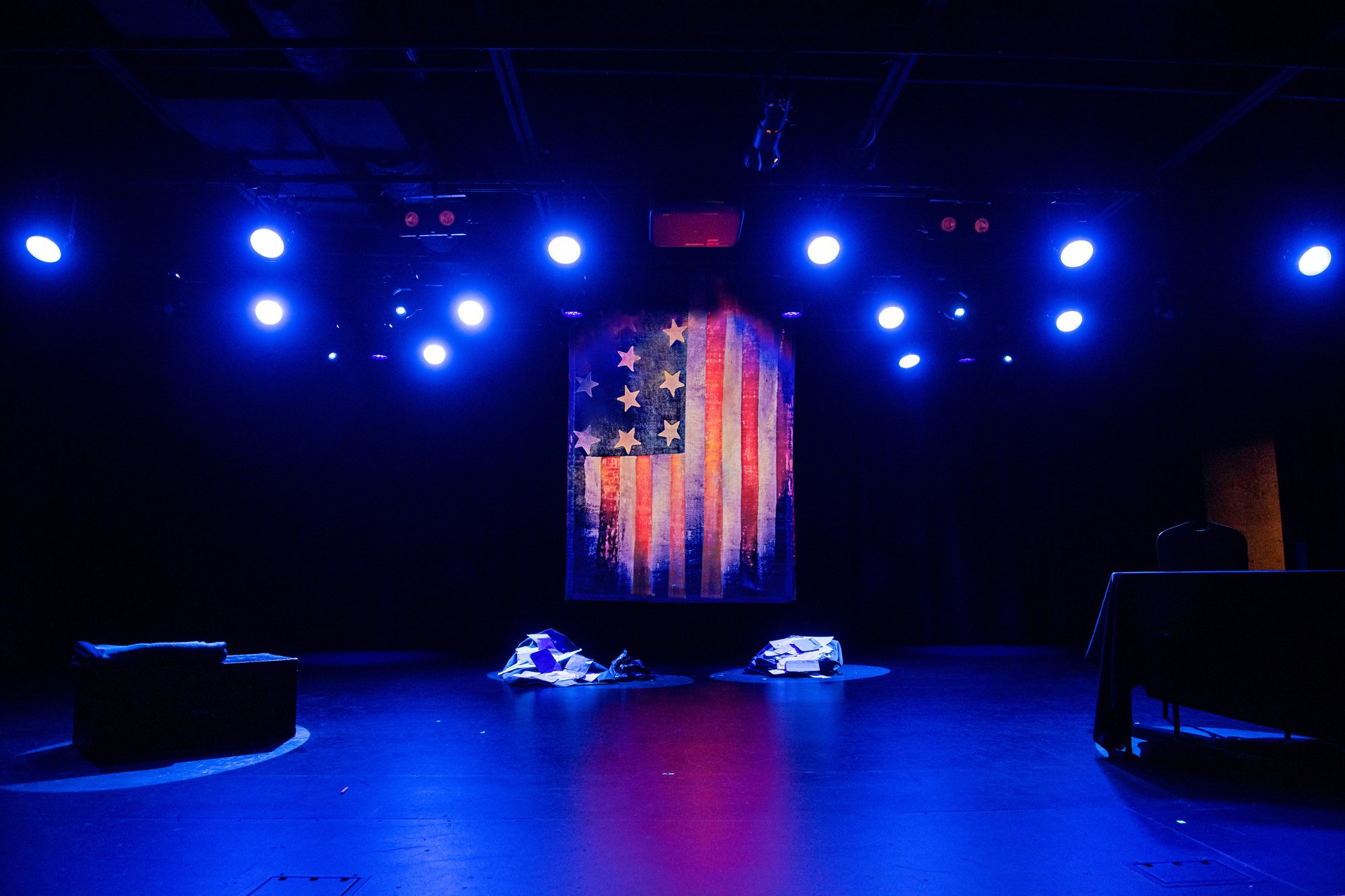
The play is straightforward to produce as my set is simply an army trunk and an American flag. I usually hang the flag up from the space I'm in, but I can travel with a projection stand to hang it up if that is easier. The only technical requirements I would need from the space are lighting and sound. I do not need a stage manager, but I need someone to help me build the lights and call the sound and lights for the production.
There is no intermission, and the play runs 75 minutes long. After each monologue, there is a 5 to 15-second transition into the next monologue with transition music. There is also a sound and light transition into the next piece. The show is extremely flexible and can adapt to just about any space. I have performed it Off-Broadway, the Kennedy Center, Library of Congress, which are theaters that have all the bells and whistles, but I have also done the show with only sound and no lights, as I did at Bannerman Castle on Bannerman Island.
The sound is run off my laptop thru the software Q-lab. It will need to be run to the soundboard for amplification. The cable to make that connection happen is not something I travel with, and that should be the cable you have coming out of your sound system at the theatre. My laptop is a MacBook Pro (Retina, 15-inch, Mid 2014), and is all up to date.
I have all the sound files and lighting and sound cues digitally, which can be emailed beforehand. The script that I share with who calls the show has all the lighting and sound cues written in it to follow along, and call the cues in the proper places.
THE PLOT + TECHNICALS OF the show
Set
My flag is my most significant set-piece, and the major part of my show is 6 feet x 9 feet. It is designed so that a pipe can drive through the fold at the top of the flag, then use some clear and strong fishing line to tie at the ends of the poll, and then hang it up to the ceiling or a light grid overhead. And if that is not an option, it can be hung up from my projection stand. Other set-pieces are a small table and chair, which I will need to borrow. And my army trunk, old combat boots, two army- bags, 50 to 60 real veteran letters at the right and left corner of the stage, and that come out of each army duffle bag one to the left and one to the right.
“A remarkable play for our Veterans and Military families!”
- The Washington Times
-
The play is 90 minutes with no intermission.
-
No, the set is simply a stage, my WWII Army trunk, my flag, and a small table and chair.
-
Description tYes. Normally, after each show, we have a Q & Aext goes here
-
The American Soldier is an award-winning solo show, and its goal is to say THANK YOU to our Veterans and to their families. It is a play to give those who have no understanding or connection to the Military a better understanding of what service and sacrifice are.
It is a powerful one-man show based on letters from Veterans and their families, spanning from the Revolution to our recent wars in Iraq and Afghanistan.
The script has been crafted through extensive research and countless interviews with veterans and their family members. It's a profoundly human story that honors our Veterans and their families and deepens our collective understanding of their experiences.
-
Yes.
-
The emotion of the performances, the history of the letters, the laughter and how powerful the story of The American Soldier is.
-
Yes, very much sho and has been performed for multiple highschools and colleges. We simply ask that students are 13 years of age nd up.
-
History and Drama
-
Yes.
-
Yes.
-
Yes.
-
Please send me an email via my contact page.
-
Bringing The American Soldier to your venue is a simple and flexible process. The play is designed to adapt to many types of spaces—from fully equipped theaters to hotel ballrooms, VFW halls, and community centers.
1. A Simple Technician (Doesn’t Need to Be a Pro):
The most important support is having someone to help “call” the sound cues during the show. It’s not difficult or overly technical—it simply means following the script and playing the sound clips at the right moments. This person can be:
A local tech from your venue
A student, veteran, or volunteer who is comfortable using a basic laptop
Anyone who can follow cues and click a button
2. Lighting (Flexible and Minimal):
Lighting can be as simple or advanced as your space allows. At a minimum, I just need my face well-lit so the audience can clearly see me.
In a theater, your existing lighting is likely perfect
In a multipurpose room, even a few basic lights or portable LEDs can work well
3. Raised Stage (If Not in a Theater):
If the performance is in a flat room like a hotel space, VFW, or Legion hall, a small raised platform is important so that everyone can see the performance clearly. A basic portable stage or riser works great
In short: If you have someone who can
